
The Scoreboard
Father Unspoken

There’s a conversation men have. You’ve had it. I’ve had it.
Someone asks how you’re going as a dad. The question lands. There’s a pause. Then someone says something about sleep. Someone else mentions the age they started solids. Another one brings up school catchment zones. The conversation moves. Nobody notices it moved.
What just happened is this: the question got answered with data. Because data is safe. Data has a format. It fits.
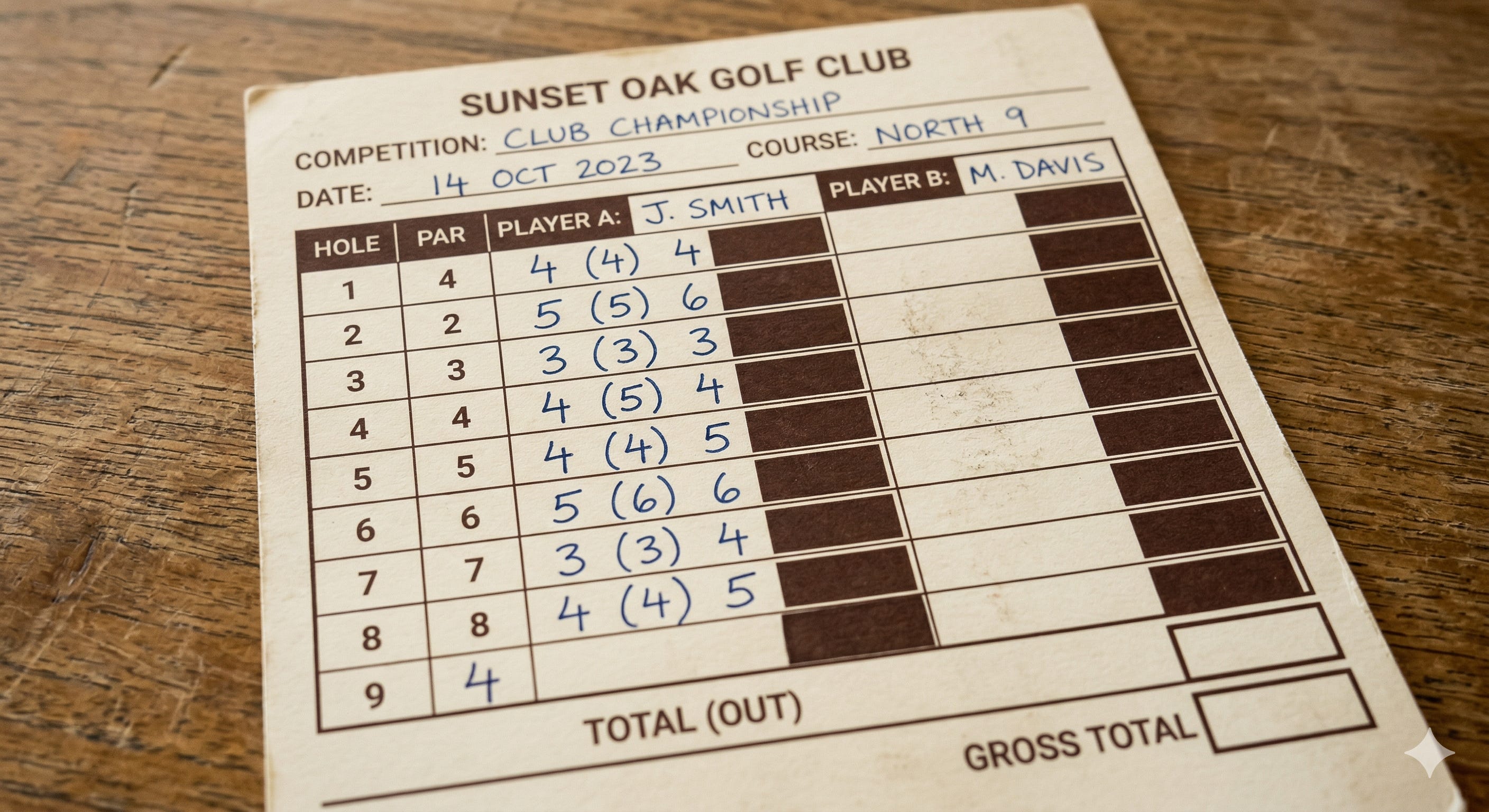
Men default to the scoreboard because the scoreboard was the first shared language they were ever given.
Sport taught it. Work reinforced it. Family dinners ran on it. How’d you go? How much did you make? Where did you finish? The scoreboard doesn’t require you to say how anything felt. It only requires you to report the result. Clean. Legible. No exposure.
It’s not that men are shallow. It’s that they were handed one language and told to use it for everything.
There’s an extra layer in my world. The men I grew up around… Hong Kong fathers, their friends, their peers had a particular version of the scoreboard. Academic results. Career titles. Property. The children’s exam scores. Legibility wasn’t just a social habit. It was a value system. You accounted for yourself in numbers or you didn’t account for yourself at all.
I’m not pointing at that as a flaw. I grew up inside it. I absorbed it. It made sense then and some of it still makes sense now.
But I’m raising a daughter. And she doesn’t have a score yet. She’s just becoming something. Slowly. In ways I can’t measure and often can’t see. Most days I don’t know how I’m going. I genuinely don’t know.
That’s the problem with parenting. There’s no scoreboard.
You can’t report the result. You can’t point to a number. You can’t say I’m at 74% or we’re in third place or the gap has closed. The game is happening but there’s nothing on the board. And when men gather, at the park, at someone’s kitchen table, on a group chat, at the pub, and the question comes up, you feel the absence of it. The silence where the score should be.
So you fill it with something that fits the format. Sleep data. Milestones. Schools. Something with a number attached.
What doesn’t get said is everything else.
Whether you feel like you know your kid. Whether you feel present or just physically there. Whether you’ve looked at her recently and felt something you didn’t expect. Whether fatherhood is making you question something you’d always assumed about yourself. Whether you feel close to this person you made. Whether you feel anything at all, or whether you’re so used to moving past that question that you don’t even register it landing anymore.
None of that has a number. So it doesn’t get reported.
I sat with a group of men not long ago. Good men. Engaged fathers. The conversation moved the way it usually moves. Kids came up. We talked around them for a while. Milestones, logistics, the usual.

Nobody said anything real. Not because they’re not thinking real things. But because nobody had the language. Or nobody wanted to be the first one to use it.
The question hung there for a moment — how are you going with it all — and then someone answered with data, and the door closed, and we moved on.
I know those men are carrying something. I am too. But we’ve all been trained on the same scoreboard, and parenting isn’t a game that keeps score.
So we’re all just playing in silence. Reporting nothing. Waiting for a number that’s never going to come.